

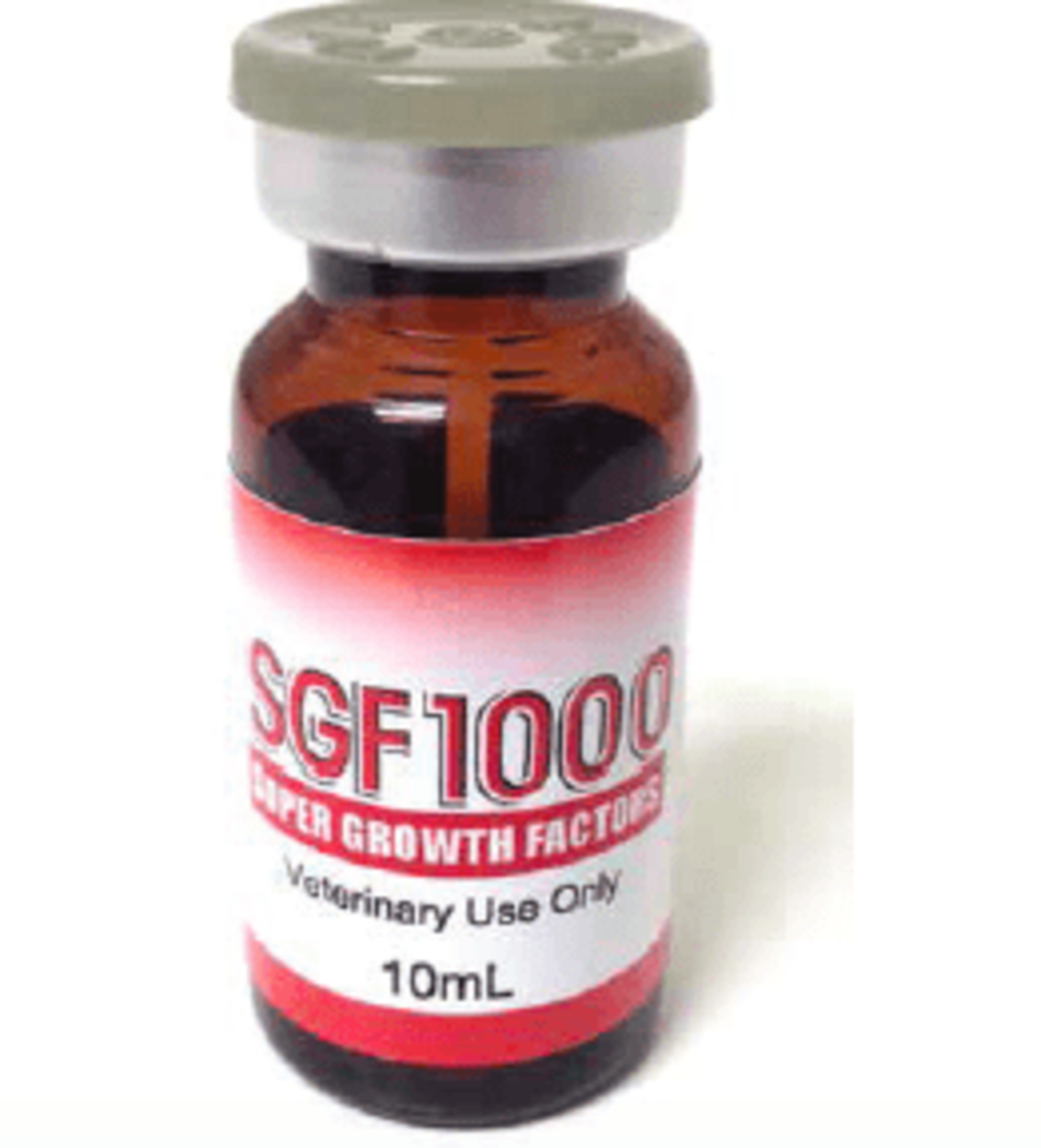
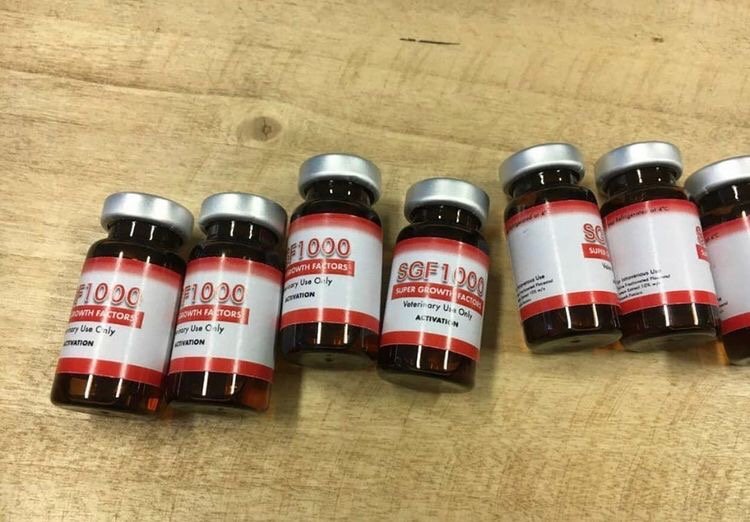
Buy SGF-1000 Online
SGF‑1000 is an advanced veterinary injectable supplement made from ovine placental extract, containing regenerative proteins, cytokines, peptides, and potent growth factors. It is marketed for horses, camels, and other performance animals to support recovery, immune function, fertility, and overall vitality.
What is SGF‑1000?
SGF‑1000 (sometimes branded as SGF‑1000 Activation) is a biological formulation derived from sheep placenta. It is manufactured using a patented low‑temperature process involving homogenisation, fractionation, and ultra‑filtration of ovine placental extract suspended in liquid.
The product contains:
- Regenerative placental proteins
- Cytokines (cell signaling molecules)
- Peptides
- Growth factors (proteins that stimulate cell growth and repair)
- Signalling molecules that regulate immune and tissue responses
Key Benefits
- Regeneration & Recovery: Supports tissue repair and recovery after training or injury.
- Immune Support: Enhances immune system function in performance animals.
- Fertility Aid: Used in breeding programs to improve reproductive outcomes.
- Performance Enhancement: Promotes stamina, vitality, and resilience in horses and camels.
- Anti‑Stress Properties: Helps animals cope with intensive training or competition.
Usage & Administration
- Typically supplied in 10ml vials, often sold in packs of 3, 6, or 12.
- Administered via injection under veterinary supervision.
- Dosage varies depending on species, weight, and intended use (performance, recovery, fertility).
- Should only be used by licensed veterinarians or under professional guidance.
Why Choose Horse Vet Meds for SGF‑1000?
At Horse Vet Meds, SGF‑1000 is offered as part of a trusted catalog of veterinary medicines and supplements. Customers benefit from:
- Global Shipping to Europe, Canada, Australia, Mexico, Spain, Germany, France, and the Netherlands.
- Competitive Pricing with authentic sourcing.
- Customer Support via email or WhatsApp for product guidance.
- Secure Ordering with reliable packaging and handling.
SGF-1000 Risks & Considerations
- Not FDA‑approved for human use — strictly veterinary.
- Potential misuse: Some markets promote SGF‑1000 as a performance enhancer; ensure compliance with local regulations.
- Veterinary supervision required: Incorrect dosing may cause adverse effects.
- Ethical concerns: As a placental extract, sourcing and use may raise animal welfare questions.
SGF-1000 Activation is an innovative formulation consisting of Regenerative Placental Proteins, Cytokines (polypeptide regulators of diverse embryological origin Activation is an innovative formulation consisting of Regenerative Placental Proteins, Cytokines (polypeptide regulators of diverse embryological origin), Peptides, potent Growth Factors and Signalling Molecules derived from Ovine Placental Extract. Activation is manufactured and purified through a patented low temperature process that involves homogenisation, fractionation and ultra-filtration of ovine placental extract suspended in a liquid.
What are Growth Factors? SGF-1000
A Growth Factor is a group of proteins that initiate further growth of specific cells. Growth Factors play a major role in enhancing cell differentiation, cell division and preventing cell death.
When scientists began studying the effects of biological substances on cells and tissues in culture, they discovered peptide like hormone substances that were seen distinct from previously any established hormones. Because these substances were effective in activating the growth of cells and tissues, they were labelled growth factors.
Transforming Growth Factor Beta-1
Transforming Growth Factor Beta–1 controls multiple functions such as cell increases, differentiation and cell transformation. Another major role for TFGB-1 is that helps prevent apoptosis which the self destruction of cells. As TGFB-1 is found naturally in the body it plays an important role even before birth as it helps form blood vessels, regulate muscle tissue, wound healing, and immune system functions. It is abundant in the tissues that help construct the mammalian skeleton; this is where it helps regulate bone growth.
A published study has revealed that is the component that depletes the most during the aging process of the Equine Articular Cartilage. A higher concentration found in knee joints of juvenile animals is the reason for their elevated capacity to heal cartilage defects [1]. It is also interesting to note that TGFB-1 proteins were able to restore proteoglycan synthesis to control levels in the presence of Inteleukin-1B [1].
The molecular mechanisms which push equine airway remodelling remain undefined but aberrant signalling by th-1 is increasingly recognized as playing a major role [2]. This protein is an important fibroblast chemotactic factor. The numbers of fibroblasts have been proven to correlate with the expression of TGFB-1. It can also be accredited th1 induces differentiation of fibroblasts to myofibroblasts.
Transforming Growth Factor Beta-2
Some people like to think of the Transforming Growth Factor Beta-2 (TGFB-2) as the OCD protein because it only allows cell growth and cell division in a very controlled manner.
In a 1999 study, it saw TGFB-2 significantly stimulate the activity of gelatinases A and B which resulted in the Equine Ovarian Stromal Cells remodelling process [3].
Fibroblast Growth Factor Beta-2
Fibroblast Growth Factor Beta-is a very potent angiogenic protein which means it stimulates the process of sprouting new blood vessels from already existing ones. Its most common veterinary use is supplying rise to tissue granulation which fills up the remaining space during the early wound healing


Reviews
There are no reviews yet.